A Series in One Project: Scripts Side by Side and a Bible That Stays True
A season is a set of scripts that have to agree with each other. How to keep every episode, and the bible behind them, in one project instead of a folder of files.
EpicDraft
Insights about writing stories with EpicDraft.

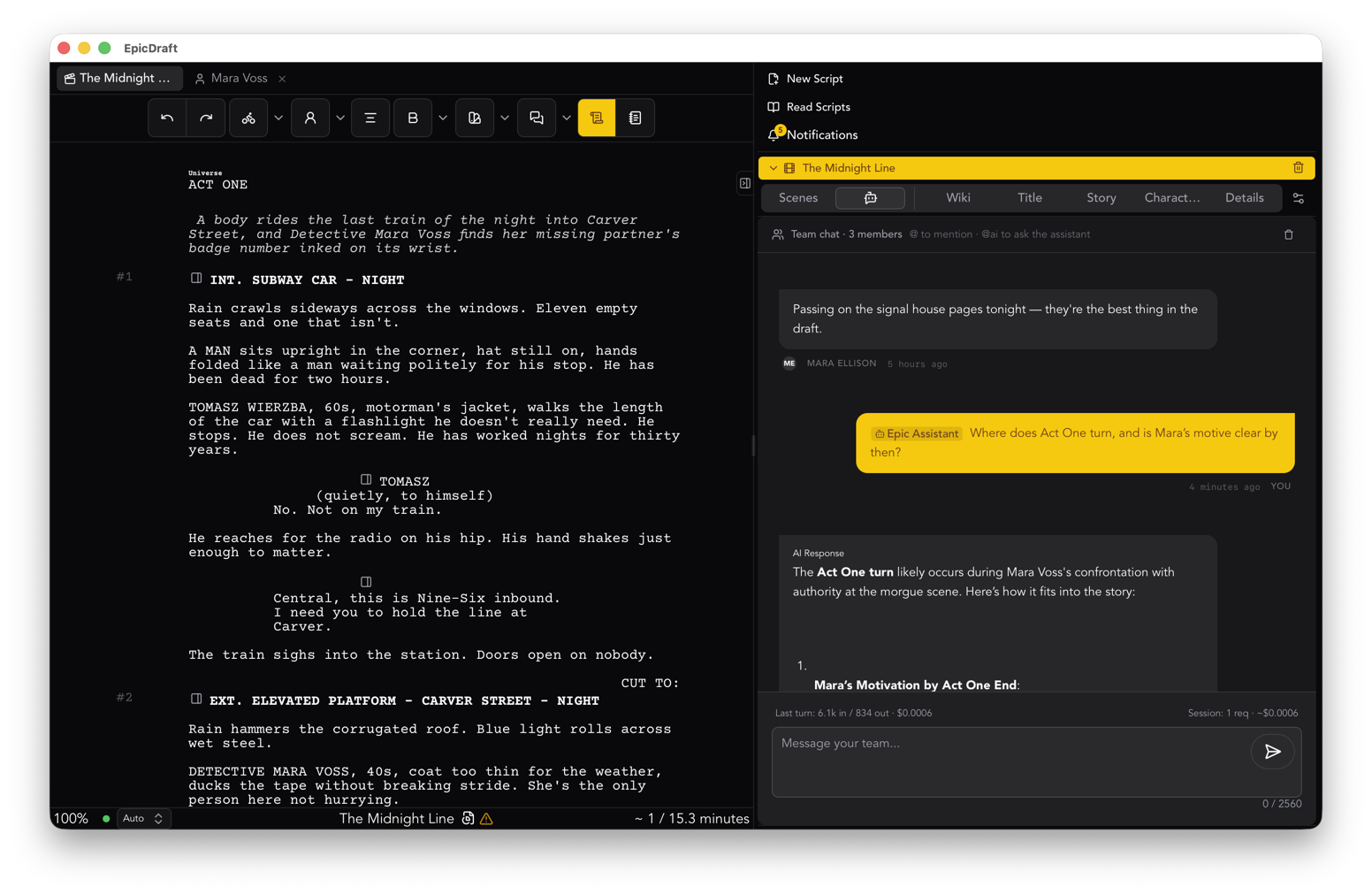
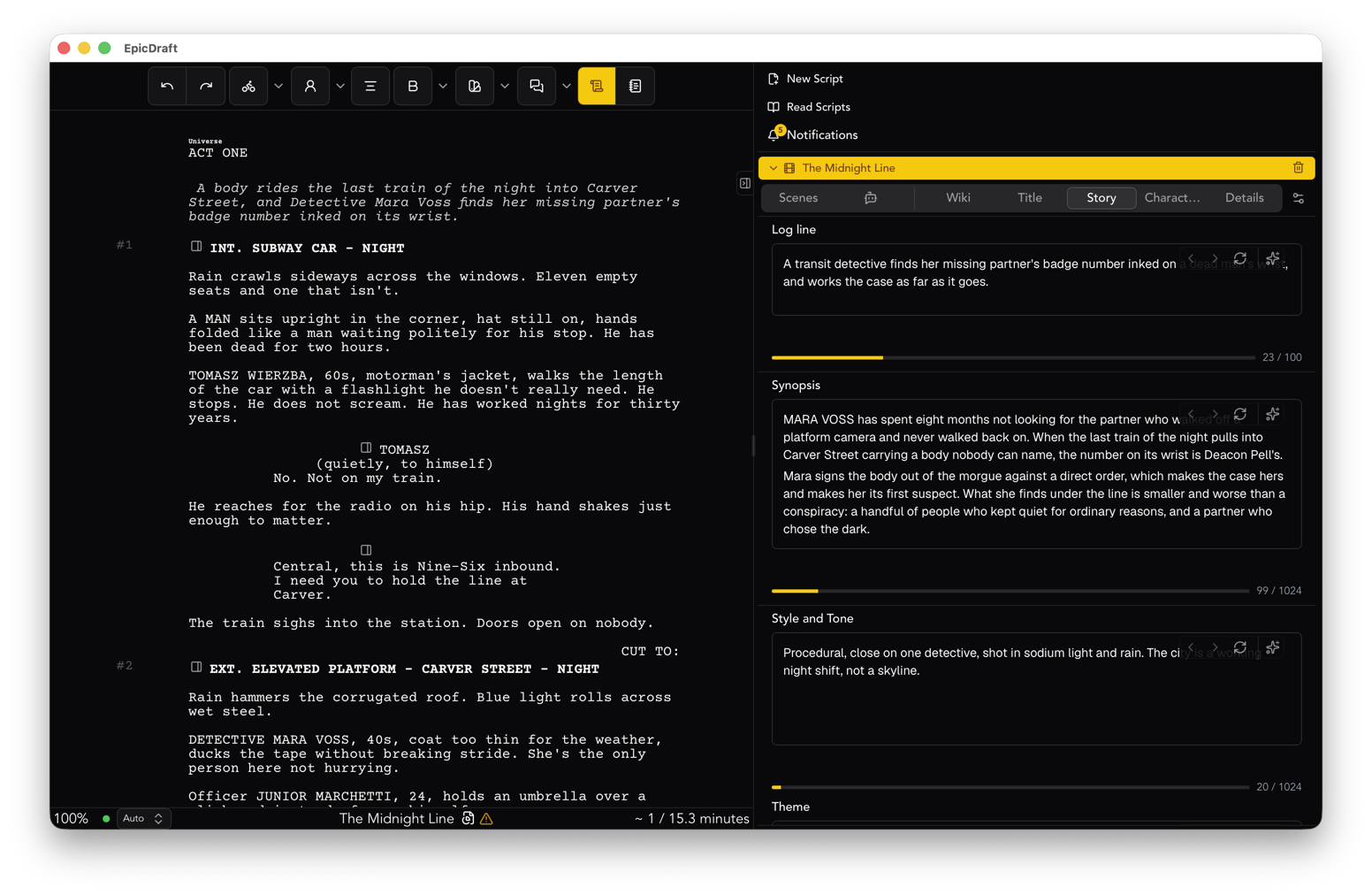
A season is a set of scripts that have to agree with each other. How to keep every episode, and the bible behind them, in one project instead of a folder of files.

Branching dialogue is still drama. How to write each node as a scene, let variables carry the consequences, catch dead ends early, and hear a branch read aloud.

How a script becomes a shooting schedule: tag what each scene needs, lay the scenes on a stripboard, and see exactly which scenes did not fit.

A storyboard goes stale the day the script changes. Here is how an animatic can read its captions from the page instead, and what stays in step when you rewrite.

Hear the whole script before anyone reads it. How a table read works with a voice per character, parts handed to people, and a teleprompter for the room.

A plain list of what changed since 0.33: projects with many scripts, Writer and Director views, a Production view, live table reads, and which parts are Free, Pro or in Labs.

A writing assistant reads everything you give it. Where it runs decides who else does. The case for local models, and how EpicDraft does it.

Local-first is a promise about where your script lives and what happens when a company changes its mind. Here is what it means in practice, file by file.

Every screenwriting app has a door. Here is where it is, what fits through it, and what each format keeps and loses on the way out.

Margins, font, every element and where it sits on the page, the title page, and the mistakes readers notice first. One page to bookmark, with the Fountain markup for each.

A phone on a bus at 2am is a writing desk if the app treats it like one. What changes when you draft on a screen four inches wide, and what we built for it.